
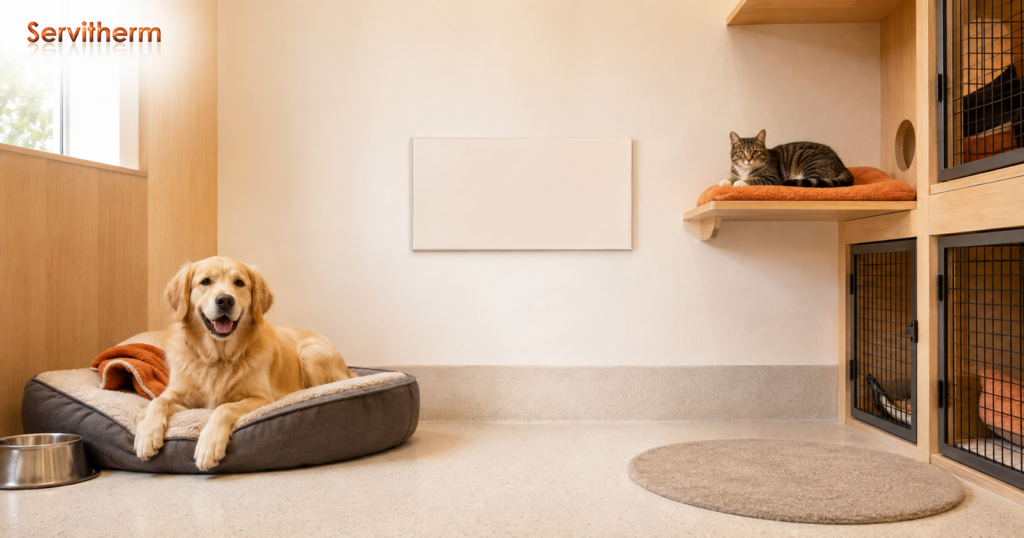
Maintaining a comfortable temperature in kennels and catteries can be challenging. Animal accommodation may contain individual sleeping compartments, exercise areas, corridors and frequently opened doors, so heating the entire building uniformly can consume energy without giving every animal the conditions it needs.
A more targeted approach may help. Low-wattage radiant panels can provide supplementary warmth in selected resting areas while thermostatic controls, insulation and ventilation manage the wider environment.
However, low-energy heating must never come at the expense of animal welfare. The objective is not simply to reduce electricity use—it is to provide safe, controllable warmth appropriate to each animal and the premises.
What Does Low-Energy Heating Mean?
“Low-energy” does not mean that a heater produces free heat or is automatically cheaper than every alternative. It generally refers to reducing unnecessary energy consumption through:
- Lower-wattage heating equipment
- Zoned or localised heating
- Appropriate temperature controls
- Suitable operating schedules
- Improved insulation and draught management
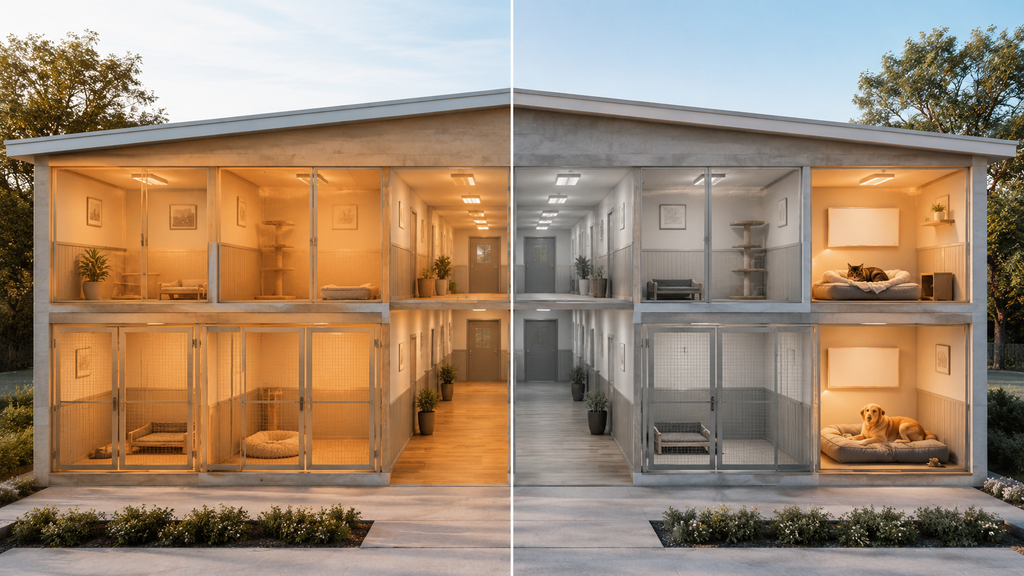
A 200-watt heater running continuously uses 0.2 kilowatt-hours of electricity per hour. Its actual running cost therefore depends on the electricity tariff and how frequently a thermostat switches it on.
The most meaningful comparison is not simply between heater wattages. Operators should consider how many heaters are required, their operating hours and whether the existing system would still need to run alongside them.
Kennel and Cattery Temperature Requirements
Licensed animal-boarding premises in England must provide an environment suitable for the species, age, health and condition of the animals.
For dog kennels, temperature regulation should keep at least part of the sleeping area above an absolute minimum of 10°C and below 26°C. Dogs must be monitored for signs of heat or cold intolerance and must be able to move away from a direct heat source.
For catteries, the requirements are more specific. At least part of a cat’s sleeping accommodation should normally remain between 15°C and 26°C and must never fall below 10°C. The required higher standard is a sleeping-area temperature between 18°C and 26°C. These figures and the associated safety requirements are detailed in the government’s statutory guidance for cat-boarding establishments.
Individual requirements still vary. Young, elderly, short-coated, underweight or unwell animals may need additional consideration and, where necessary, veterinary advice.
How Radiant Panels Can Support Animal Accommodation
Radiant panels transfer heat towards nearby people, animals and surfaces instead of relying entirely on warming and circulating a large volume of air.
In kennels and catteries, this can make them useful for providing supplementary warmth near:
- Sleeping compartments
- Raised resting platforms
- Recovery or isolation areas
- Staff-supervised grooming spaces
- Sections affected by unavoidable heat loss
The panel should warm a defined resting zone rather than the entire enclosure. The animal must retain access to an unheated or cooler area so it can regulate its own comfort.
This approach may be particularly useful in accommodation where every occupied unit does not require the same degree of additional warmth. Instead of raising the temperature throughout the building, operators can respond more precisely to occupancy and individual needs.
Positioning a Panel Safely
A heating panel should never be positioned where an animal can lie directly against it, chew its cable or interfere with its fittings.
The installation should keep the heater and electrical connections outside normal animal reach. Cables should be securely routed and protected, with no loose sections entering the enclosure. Sockets, plugs and controls must also be protected from physical damage.
The panel should face the intended resting area without obstructing ventilation or exposing bedding to unsafe levels of heat. Clearances specified by the manufacturer must always be followed.
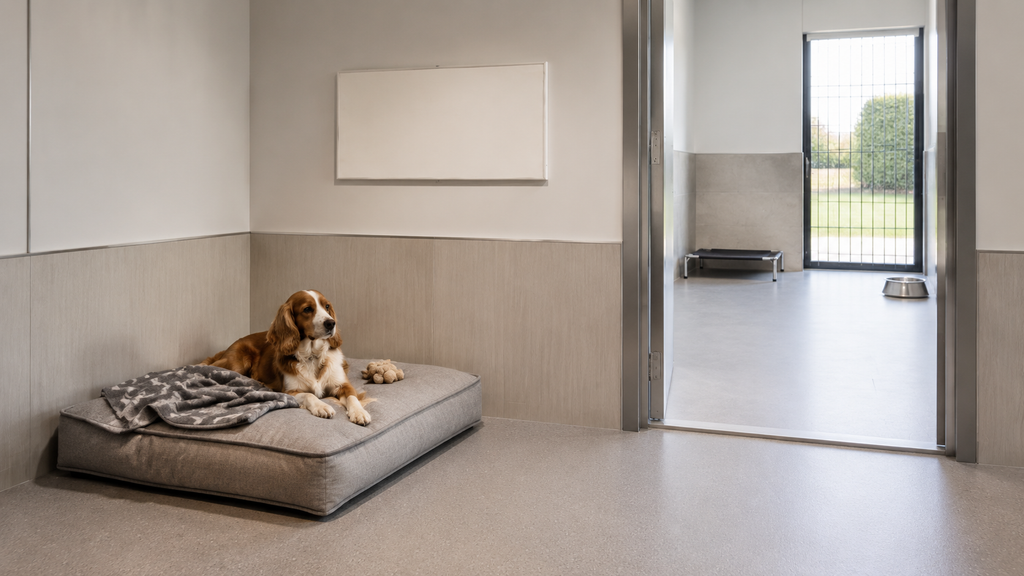
Kennels and catteries are regularly washed and disinfected, so the heater, controls and electrical installation must also be suitable for the location. An IP rating attached to a thermostat or controller must not be assumed to apply to the heating panel itself.
Installation should be assessed and completed by a competent person, particularly where equipment will operate near moisture, cleaning chemicals or animals.
Controls and Temperature Monitoring
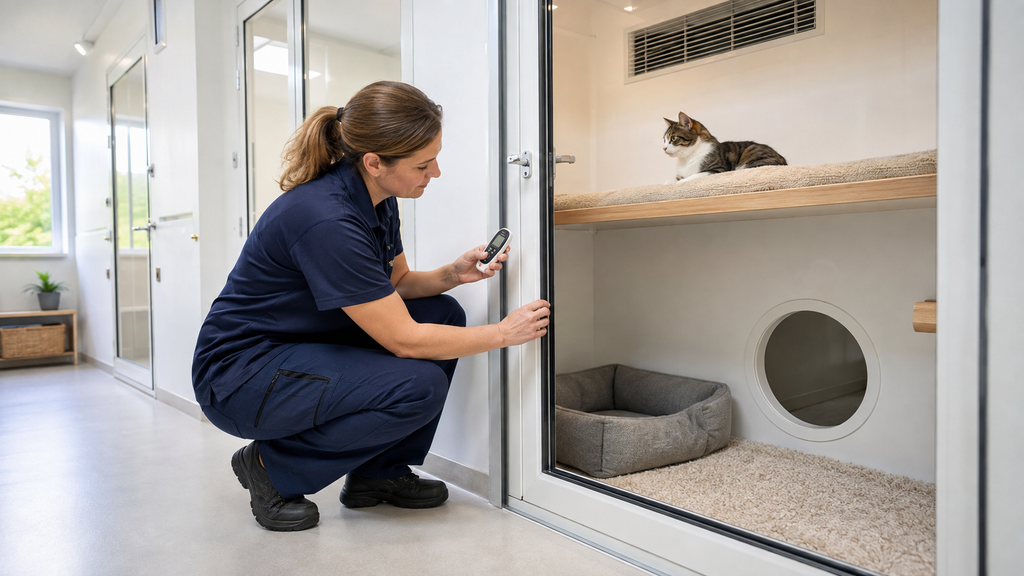
A thermostat helps prevent a supplementary heater from operating when it is not required. It should measure a representative part of the animal’s environment rather than being placed directly beside the panel, in a draught or where sunlight could distort the reading.
Operators should also use independent thermometers to check sleeping areas. Routine records can reveal overnight temperature drops, overheating or differences between apparently similar enclosures.
Controls do not remove the need for physical observation. Staff should watch for behavioural signs such as persistent curling, shivering, seeking heat continuously, panting or repeatedly moving away from a heated area.
A contingency plan is also important. Heating failure, power loss or extreme weather should not leave animals without a safe alternative.
Improving Efficiency Before Adding More Heat
Before installing additional heaters, examine where the building is losing warmth. Common problems include damaged seals, poorly insulated roofs, cold floors and doors left open during cleaning or animal movements.
Efficiency may be improved by:
- Repairing draughts without restricting necessary ventilation
- Insulating sleeping accommodation appropriately
- Using dry, suitable bedding
- Separating heated resting zones from open exercise areas
- Matching heating schedules to occupancy
- Maintaining panels, controls and temperature sensors
Ventilation must not be reduced merely to retain heat. Fresh air and humidity control remain essential for animal health, odour management and a hygienic environment.
Servitherm Panels for Targeted Supplementary Heating
Servitherm Slimline radiant panels are available in outputs from 100 to 310 watts, allowing the output to be matched more closely to a defined application. Their slim design can help where bulky equipment would obstruct access or reduce usable space.
They should be treated as supplementary, localised heaters unless a complete assessment establishes that they can meet the calculated heat demand of the premises. Panel selection must consider enclosure dimensions, insulation, ventilation, ambient temperature and the intended mounting position.
A Balanced Approach to Animal Comfort
Low-energy heating for kennels and catteries is most effective when it forms part of a complete environmental plan. Localised radiant panels can reduce the need to overheat unused space, but they cannot compensate for poor insulation, uncontrolled draughts, inadequate ventilation or weak monitoring procedures.
Correctly specified and safely positioned, a low-wattage panel can give an animal access to a warmer resting zone while preserving its ability to move away. That combination of choice, control and careful monitoring should remain central to every kennel or cattery heating decision.