
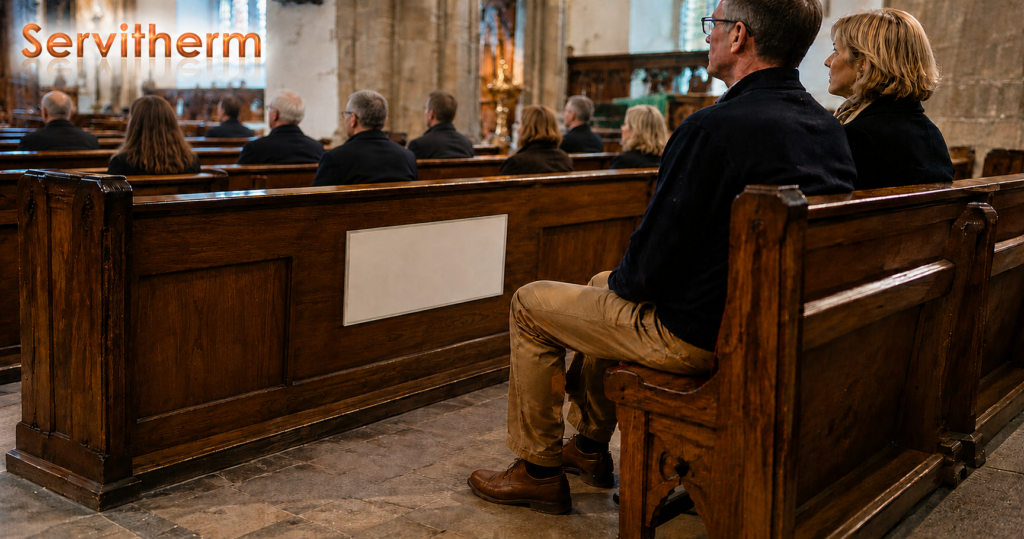
Churches are among the most challenging buildings to heat. High ceilings, large internal volumes, solid masonry, historic furnishings and intermittent occupancy can make conventional whole-building heating slow or costly to operate.
A church may need to provide comfortable conditions for a service lasting little more than an hour, followed by several periods when much of the building is unoccupied. Attempting to raise the temperature of the entire structure for every short event may not be the most practical approach.
Localised radiant heating offers an alternative by concentrating warmth around occupied seating rather than treating every part of the church equally. When correctly selected and installed, pew-mounted panels can provide supplementary warmth close to congregants without needing to heat the complete air volume first.
Why Are Churches Difficult to Heat?
Many churches were constructed long before modern heating systems, insulation standards or expectations of thermal comfort. Their design can create several practical difficulties:
- High ceilings allow warmed air to rise away from occupants
- Thick stone walls and floors can remain cold
- Large doors may introduce draughts
- Extensive glazing can contribute to heat loss
- Services and activities may occupy only part of the building
- Usage patterns can change considerably from one day to another
- Historic fabric can restrict alterations and installation routes
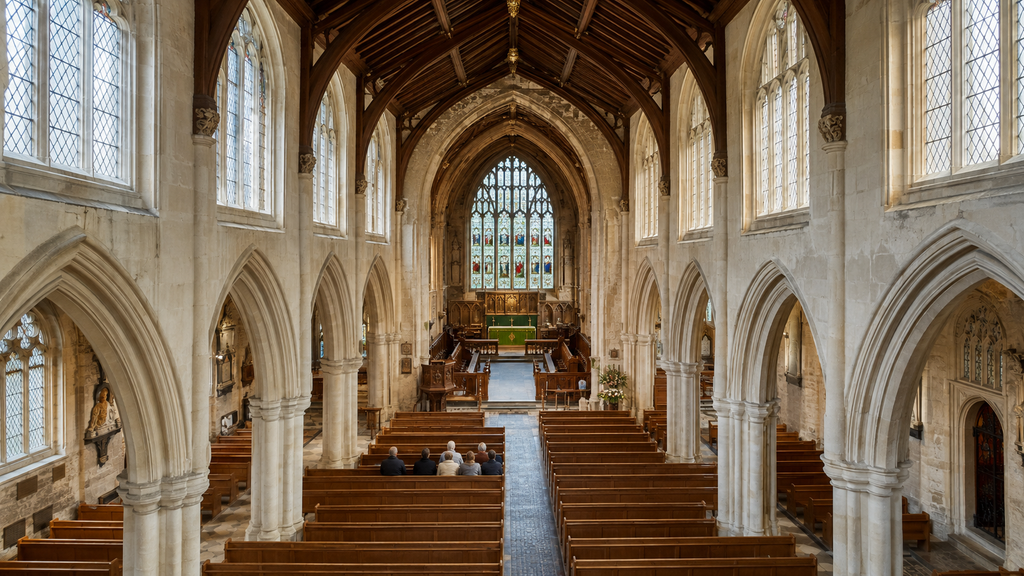
A system designed only to increase air temperature may need considerable time to influence how comfortable the building feels. The heating could therefore be operating before, during and after a relatively short period of occupancy.
Localised heating approaches the problem differently. Instead of attempting to make every surface and unused corner equally warm, it provides heat closer to the people occupying a defined seating area.
How Does Localised Pew Heating Work?
A slim radiant panel can be fitted to the rear face of a pew backrest, with its broad surface directed towards the lower legs of people seated in the row behind. This creates a clearly defined heated zone around the occupied position.
The panel must be installed on the pew in front of the intended occupants—not on the rear of their own seat facing away from them. Correct orientation is essential because a panel hidden behind solid timber or directed towards an empty aisle will not serve the intended seating position effectively.
This arrangement can be useful for:
- Regular Sunday services
- Weekday worship in a smaller seating area
- Choir rehearsals and music events
- Community meetings
- Small groups using only one part of the church
- Supplementing background heating during colder weather
The Church of England describes pew heaters and infrared panels as forms of localised or “people” heating. Its guidance recognises that localised systems can provide comfort without unnecessarily heating the whole church space.
For a more detailed explanation of the underlying heat-transfer process, read our guide to how radiant panel heaters work.
Correct Panel Positioning on Church Pews
The panel should fit entirely within the rear face of the pew. It must not extend beyond the edges, interfere with seating or project into an aisle where it could be struck.
A suitable pew installation should consider:
- The width and construction of the backrest
- Distance between the panel and occupants’ legs
- Available space between consecutive pews
- Cable routes and protection
- Cleaning and maintenance access
- Surface-temperature clearances
- The location of switches, thermostats or other controls
- Whether the pew is fixed, movable or historically significant
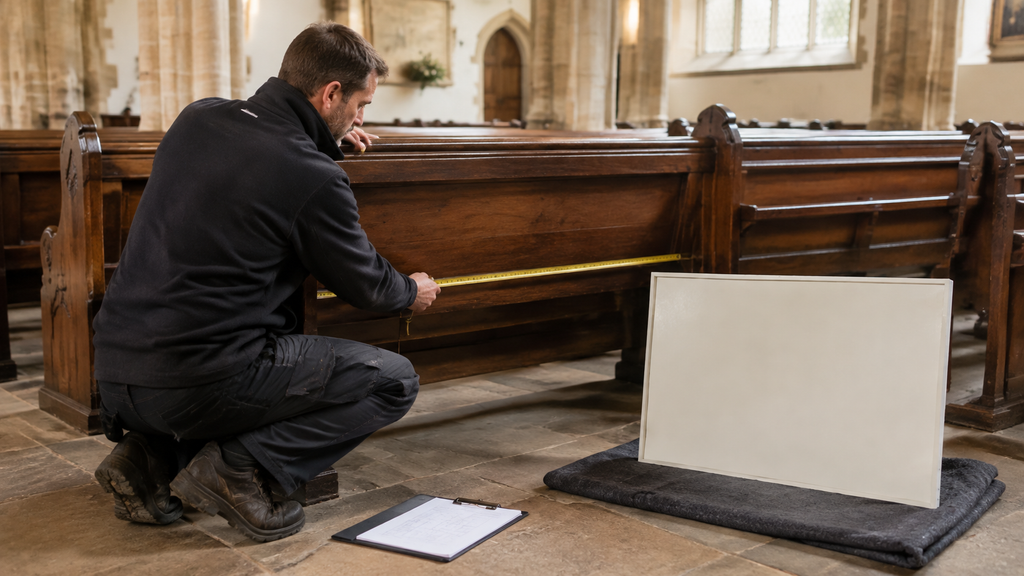
Panels should be positioned consistently across the selected rows. Irregular mounting heights or different distances from occupants may create uneven results.
Cables should be unobtrusive, mechanically protected and kept away from feet, cleaning equipment and areas where people enter or leave the pew. The installation should not create trip hazards or prevent the seating area from being used safely.
The heater must also remain uncovered. Service sheets, cushions, coats, bags and seasonal decorations should not be placed against the panel.
Protecting Historic Church Interiors
Church heating projects require more than choosing a suitable electrical product. Pews, platforms, floors and nearby finishes may form part of the building’s historic significance.
Historic England states that electric pew heaters can be useful where only a small part of a building is occupied or where short periods of heat are required. However, its guidance on heating historic places of worship cautions against attaching heaters to seating of historic or aesthetic interest where doing so could cause damage.
Before installation, the church should establish:
- Whether the building or seating is listed or otherwise protected
- Whether the proposed work requires faculty or another form of consent
- How wiring can be installed with minimal effect on historic fabric
- Whether fixing points can be reversed in the future
- Whether heat could affect timber, finishes or nearby objects
- Who is responsible for inspecting and maintaining the system
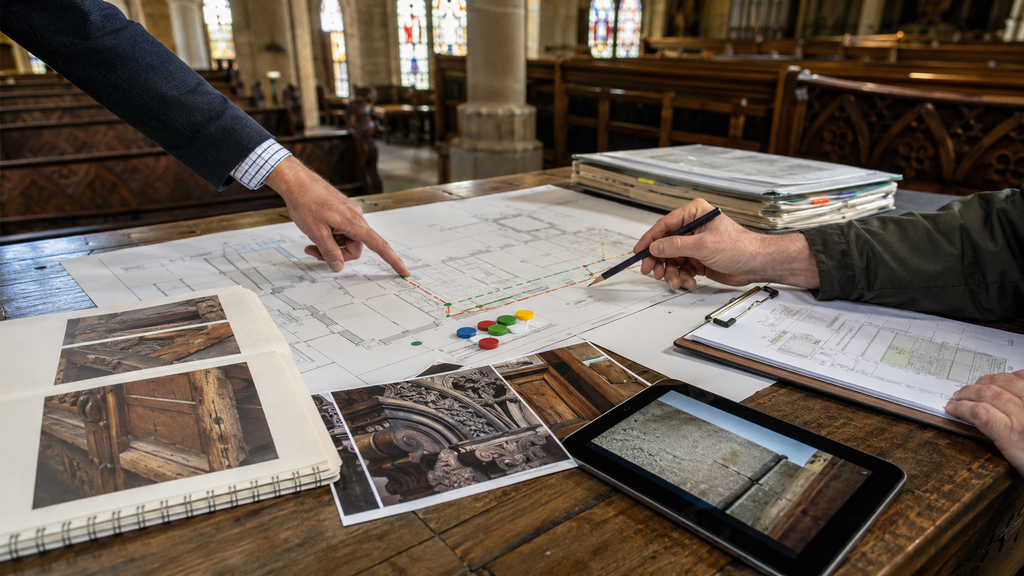
The Parochial Church Council should consult its architect, electrical contractor and appropriate church or conservation advisers before altering significant seating. A product’s suitability for general pew heating does not remove the need for building-specific approval.
Controls for Intermittently Used Churches
Pew heating should correspond with actual occupancy. Operating every heated row for a small weekday gathering would undermine the advantage of a localised system.
Useful control strategies may include:
- Dividing pews into separately controlled zones
- Activating only the rows expected to be occupied
- Using timers matched to service schedules
- Providing thermostatic control where appropriate
- Clearly labelling switches and heating zones
- Assigning responsibility for switching the system off
Controls should be straightforward enough for authorised church staff and volunteers to operate reliably. Written instructions can help prevent the system being activated unnecessarily or left running after an event.
Choosing a Servitherm Panel for Church Pews
The Servitherm Slimline Panel Heater range includes outputs from 100W to 310W, allowing panel size and output to be selected according to the available pew space and intended application. The panels normally operate at approximately 60°C to 70°C and incorporate thermal cut-out protection.
Selection should account for the dimensions of the pew, distance from occupants, number of heated rows, electrical capacity and proposed controls. The panel should fit the furniture correctly rather than being forced into an unsuitable mounting position.
[INTERNAL LINK: Link “Servitherm Slimline Panel Heater range” to the panel-heater product page.]
A site assessment is particularly important where several panels may operate simultaneously. The existing electrical installation, circuit capacity, cable routes and control arrangement should be reviewed by a suitably qualified professional.
Is Pew Heating Suitable for Your Church?
Pew-mounted radiant panels can provide practical supplementary warmth where a church is used intermittently or only selected seating areas need to be occupied. Their value lies in placing controlled heat close to congregants rather than automatically heating the entire building for every event.
The correct solution must respect the church’s architecture, historic fabric, electrical installation and pattern of use. Servitherm can help churches identify an appropriate panel size and control arrangement once these building-specific requirements have been established.